Cyber Threats in Europe: Key Learnings from the Latest ENISA Threat Landscape Report
10. March, 2026

Ransomware groups are increasingly using zero-day exploits and more advanced attack techniques, state actors disguise their campaigns as ordinary cybercrime, and geopolitical tensions are increasingly leading to attacks on suppliers, managed service providers, and public institutions.
The latest ENISA Threat Landscape Report clearly shows that the traditional distinction between cybercrime, hacktivism and state-sponsored actors is becoming less meaningful. Attackers increasingly adopt each other’s tools, infrastructure and tactics, making attribution more difficult.
For IT administrators and security professionals, this means one thing above all: the threat landscape is becoming more complex – and it increasingly affects smaller organizations as well.
The ENISA Threat Landscape Report 2025 analyzes 4,875 verified security incidents between July 2024 and June 2025, highlighting which attack techniques are currently most relevant.
One of the key terms in the ENISA report is convergence.
In the past, cyber threats could often be categorized more clearly—for example as financially motivated cybercrime or state-sponsored espionage. Today, however, these boundaries are increasingly blurred. According to ENISA, hybrid attack campaigns are becoming more common, where different threat actors use similar tools and techniques.
Examples include:
This development not only makes attribution more difficult—it also accelerates the spread of new attack techniques.
Many organizations still assume that cyber attackers mainly focus on large corporations. The ENISA report paints a different picture.
The most frequently targeted sector in the EU is public administration, accounting for around 38.2% of the observed incidents.
Other frequently affected sectors include transport and logistics, digital infrastructure, financial services and industry. One important reason is the growing interconnectivity of organizations: attackers deliberately target suppliers or IT service providers as entry points to reach larger targets.
Many smaller companies assume they are too insignificant to attract attackers. In reality, the opposite is often true. SMEs are frequently targeted because they are part of larger supply chains, have fewer IT security resources, or can serve as an entry point into larger organizations. Basic cyber hygiene and resilience measures are therefore essential for organizations of all sizes.
The ENISA report highlights several key developments.
This so-called triple-extortion strategy is designed to maximize financial impact.
Many of these attacks target government institutions, banks, and transportation or infrastructure companies. In some cases, DDoS attacks are used as a distraction, while deeper intrusions occur in parallel.
A compromised service provider can potentially give attackers access to multiple organizations at once.
The ENISA report notes that AI tools significantly lower the barrier for social engineering attacks, for example by enabling automated generation of convincing phishing messages or deepfake audio.
Based on the findings of the ENISA report, organizations should regularly review their security strategies. The following points provide a practical starting point for internal security reviews.
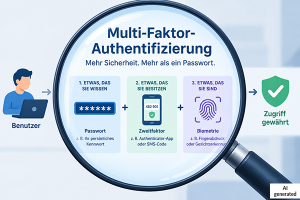
Strengthen MFA
Review Service Accounts
Immutable Backups
Offline Emergency Plans
If central systems such as Active Directory or VoIP fail, digital incident response documentation may no longer be accessible.
Vendor Risk Management
Identify Shadow IT
Update security awareness training with a focus on:
Implement verification processes:
Many of the measures mentioned in the ENISA report directly correspond to requirements of the NIS2 Directive. Especially important:
Prioritize patch management — especially for systems exposed to external networks:
The time between vulnerability disclosure and the first exploits appearing is now often less than 24 hours.
The ENISA Threat Landscape Report 2025 clearly shows that the cybersecurity landscape is becoming increasingly hybrid and complex. Cybercriminals, hacktivists and state-sponsored actors are using similar tools and infrastructure—and increasingly targeting indirect entry points such as suppliers or IT service providers.
Cybersecurity is not a one-time project but an ongoing process. Organizations should regularly review their security architecture, particularly with regard to identity management, resilience and backup strategies, supply chain risks, awareness against social engineering, network segmentation and patch management.
.
 https://www.ikarussecurity.com/wp-content/uploads/2026/09/MFA-de-1.png
400
600
IKARUS
https://www.ikarussecurity.com/wp-content/uploads/2026/02/IKARUS-Security-Logo-2.png
IKARUS2026-09-14 14:46:442026-09-14 14:46:45MFA Fatigue: The Risk Behind Push Approvals
https://www.ikarussecurity.com/wp-content/uploads/2026/09/MFA-de-1.png
400
600
IKARUS
https://www.ikarussecurity.com/wp-content/uploads/2026/02/IKARUS-Security-Logo-2.png
IKARUS2026-09-14 14:46:442026-09-14 14:46:45MFA Fatigue: The Risk Behind Push Approvals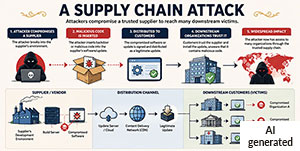 https://www.ikarussecurity.com/wp-content/uploads/2026/06/supply-chain-attack-300-AI-generated.jpg
151
300
IKARUS
https://www.ikarussecurity.com/wp-content/uploads/2026/02/IKARUS-Security-Logo-2.png
IKARUS2026-06-26 12:27:172026-08-02 13:36:09Supply Chain Attacks: When Service Providers Become the Gateway
https://www.ikarussecurity.com/wp-content/uploads/2026/06/supply-chain-attack-300-AI-generated.jpg
151
300
IKARUS
https://www.ikarussecurity.com/wp-content/uploads/2026/02/IKARUS-Security-Logo-2.png
IKARUS2026-06-26 12:27:172026-08-02 13:36:09Supply Chain Attacks: When Service Providers Become the Gateway https://www.ikarussecurity.com/wp-content/uploads/2023/05/ransomware-2.jpg
338
600
IKARUS
https://www.ikarussecurity.com/wp-content/uploads/2026/02/IKARUS-Security-Logo-2.png
IKARUS2026-04-28 09:39:482026-04-28 09:41:39Ransomware is changing: from encryption to data Theft
https://www.ikarussecurity.com/wp-content/uploads/2023/05/ransomware-2.jpg
338
600
IKARUS
https://www.ikarussecurity.com/wp-content/uploads/2026/02/IKARUS-Security-Logo-2.png
IKARUS2026-04-28 09:39:482026-04-28 09:41:39Ransomware is changing: from encryption to data Theft https://www.ikarussecurity.com/wp-content/uploads/2026/03/IKARUS_Logo-red-rgb-350.png
84
350
IKARUS
https://www.ikarussecurity.com/wp-content/uploads/2026/02/IKARUS-Security-Logo-2.png
IKARUS2026-03-02 10:06:202026-03-02 10:06:29New Company Name and New Office Address as of March 1, 2026
https://www.ikarussecurity.com/wp-content/uploads/2026/03/IKARUS_Logo-red-rgb-350.png
84
350
IKARUS
https://www.ikarussecurity.com/wp-content/uploads/2026/02/IKARUS-Security-Logo-2.png
IKARUS2026-03-02 10:06:202026-03-02 10:06:29New Company Name and New Office Address as of March 1, 2026 https://www.ikarussecurity.com/wp-content/uploads/2026/02/BSI-DSZ-BSZ-0021-2025_IT-Sicherheitszertifikat_eng12019.png
753
752
IKARUS
https://www.ikarussecurity.com/wp-content/uploads/2026/02/IKARUS-Security-Logo-2.png
IKARUS2026-02-02 16:12:312026-02-02 16:18:51BSI-certified EDR agent for HarfangLab Guard feat. IKARUS
https://www.ikarussecurity.com/wp-content/uploads/2026/02/BSI-DSZ-BSZ-0021-2025_IT-Sicherheitszertifikat_eng12019.png
753
752
IKARUS
https://www.ikarussecurity.com/wp-content/uploads/2026/02/IKARUS-Security-Logo-2.png
IKARUS2026-02-02 16:12:312026-02-02 16:18:51BSI-certified EDR agent for HarfangLab Guard feat. IKARUS https://www.ikarussecurity.com/wp-content/uploads/2024/10/HarfangLab-Guard-400.jpg
285
400
IKARUS
https://www.ikarussecurity.com/wp-content/uploads/2026/02/IKARUS-Security-Logo-2.png
IKARUS2026-01-27 11:45:072026-01-27 11:47:47Austrian Universities Move Toward European Endpoint Security with Data Sovereignty
https://www.ikarussecurity.com/wp-content/uploads/2024/10/HarfangLab-Guard-400.jpg
285
400
IKARUS
https://www.ikarussecurity.com/wp-content/uploads/2026/02/IKARUS-Security-Logo-2.png
IKARUS2026-01-27 11:45:072026-01-27 11:47:47Austrian Universities Move Toward European Endpoint Security with Data Sovereignty https://www.ikarussecurity.com/wp-content/uploads/2025/12/Attack-Surface-Management-600.jpg
467
600
IKARUS
https://www.ikarussecurity.com/wp-content/uploads/2026/02/IKARUS-Security-Logo-2.png
IKARUS2025-12-09 11:49:312025-12-09 11:49:32Attack Surface Management (ASM)
https://www.ikarussecurity.com/wp-content/uploads/2025/12/Attack-Surface-Management-600.jpg
467
600
IKARUS
https://www.ikarussecurity.com/wp-content/uploads/2026/02/IKARUS-Security-Logo-2.png
IKARUS2025-12-09 11:49:312025-12-09 11:49:32Attack Surface Management (ASM) https://www.ikarussecurity.com/wp-content/uploads/2025/12/1-_NDI9048.jpg
1281
1920
IKARUS
https://www.ikarussecurity.com/wp-content/uploads/2026/02/IKARUS-Security-Logo-2.png
IKARUS2025-12-03 11:57:522025-12-03 11:57:53Digital sovereignty in practice: IKARUS and HarfangLab as a success story for European cybersecurity
https://www.ikarussecurity.com/wp-content/uploads/2025/12/1-_NDI9048.jpg
1281
1920
IKARUS
https://www.ikarussecurity.com/wp-content/uploads/2026/02/IKARUS-Security-Logo-2.png
IKARUS2025-12-03 11:57:522025-12-03 11:57:53Digital sovereignty in practice: IKARUS and HarfangLab as a success story for European cybersecurity https://www.ikarussecurity.com/wp-content/uploads/2025/11/NOZOMI-EMEA-MSSP-Award-2025-web.png
420
595
IKARUS
https://www.ikarussecurity.com/wp-content/uploads/2026/02/IKARUS-Security-Logo-2.png
IKARUS2025-11-24 12:36:312025-11-24 12:36:31IKARUS Named ‘EMEA MSSP of the Year 2025’ by Nozomi Networks
https://www.ikarussecurity.com/wp-content/uploads/2025/11/NOZOMI-EMEA-MSSP-Award-2025-web.png
420
595
IKARUS
https://www.ikarussecurity.com/wp-content/uploads/2026/02/IKARUS-Security-Logo-2.png
IKARUS2025-11-24 12:36:312025-11-24 12:36:31IKARUS Named ‘EMEA MSSP of the Year 2025’ by Nozomi Networks https://www.ikarussecurity.com/wp-content/uploads/2025/11/iot-general-AI-generated.jpg
130
300
IKARUS
https://www.ikarussecurity.com/wp-content/uploads/2026/02/IKARUS-Security-Logo-2.png
IKARUS2025-11-07 11:46:412026-08-02 13:43:41ASCON: New NIST Standard for Lightweight IoT Cryptography
https://www.ikarussecurity.com/wp-content/uploads/2025/11/iot-general-AI-generated.jpg
130
300
IKARUS
https://www.ikarussecurity.com/wp-content/uploads/2026/02/IKARUS-Security-Logo-2.png
IKARUS2025-11-07 11:46:412026-08-02 13:43:41ASCON: New NIST Standard for Lightweight IoT Cryptography https://www.ikarussecurity.com/wp-content/uploads/2025/10/mail-security-firewall-300-AI-generated.jpg
200
300
IKARUS
https://www.ikarussecurity.com/wp-content/uploads/2026/02/IKARUS-Security-Logo-2.png
IKARUS2025-10-06 16:04:082026-08-02 13:45:42The Interaction Between Firewall and Email Security
https://www.ikarussecurity.com/wp-content/uploads/2025/10/mail-security-firewall-300-AI-generated.jpg
200
300
IKARUS
https://www.ikarussecurity.com/wp-content/uploads/2026/02/IKARUS-Security-Logo-2.png
IKARUS2025-10-06 16:04:082026-08-02 13:45:42The Interaction Between Firewall and Email Security https://www.ikarussecurity.com/wp-content/uploads/2025/09/Mitsubishi_Electric-Nozomi.png
400
600
IKARUS
https://www.ikarussecurity.com/wp-content/uploads/2026/02/IKARUS-Security-Logo-2.png
IKARUS2025-09-10 14:06:592025-09-10 14:07:00Customer Information: Acquisition of Nozomi Networks by Mitsubishi Electric
https://www.ikarussecurity.com/wp-content/uploads/2025/09/Mitsubishi_Electric-Nozomi.png
400
600
IKARUS
https://www.ikarussecurity.com/wp-content/uploads/2026/02/IKARUS-Security-Logo-2.png
IKARUS2025-09-10 14:06:592025-09-10 14:07:00Customer Information: Acquisition of Nozomi Networks by Mitsubishi Electric https://www.ikarussecurity.com/wp-content/uploads/2025/08/WildeTiere-Wasserloch-300-AI-generated.jpg
200
300
IKARUS
https://www.ikarussecurity.com/wp-content/uploads/2026/02/IKARUS-Security-Logo-2.png
IKARUS2025-08-13 11:17:172026-08-02 13:47:33Watering Hole Attacks: How They Work, the Risks, and Protection Strategies
https://www.ikarussecurity.com/wp-content/uploads/2025/08/WildeTiere-Wasserloch-300-AI-generated.jpg
200
300
IKARUS
https://www.ikarussecurity.com/wp-content/uploads/2026/02/IKARUS-Security-Logo-2.png
IKARUS2025-08-13 11:17:172026-08-02 13:47:33Watering Hole Attacks: How They Work, the Risks, and Protection Strategies https://www.ikarussecurity.com/wp-content/uploads/2025/07/Computerhardware-aus-den-80ern-auf-einem-Mistplatz-AI-generated.jpg
234
300
IKARUS
https://www.ikarussecurity.com/wp-content/uploads/2026/02/IKARUS-Security-Logo-2.png
IKARUS2025-07-24 13:18:212026-08-02 13:49:44Legacy Systems: How Outdated Hardware and Software Threaten Corporate Security
https://www.ikarussecurity.com/wp-content/uploads/2025/07/Computerhardware-aus-den-80ern-auf-einem-Mistplatz-AI-generated.jpg
234
300
IKARUS
https://www.ikarussecurity.com/wp-content/uploads/2026/02/IKARUS-Security-Logo-2.png
IKARUS2025-07-24 13:18:212026-08-02 13:49:44Legacy Systems: How Outdated Hardware and Software Threaten Corporate Security https://www.ikarussecurity.com/wp-content/uploads/2025/07/Windows-Zero-Day.jpg
607
800
IKARUS
https://www.ikarussecurity.com/wp-content/uploads/2026/02/IKARUS-Security-Logo-2.png
IKARUS2025-07-10 13:23:132025-07-10 13:23:15Zero-Day Vulnerability in Windows Shortcuts
https://www.ikarussecurity.com/wp-content/uploads/2025/07/Windows-Zero-Day.jpg
607
800
IKARUS
https://www.ikarussecurity.com/wp-content/uploads/2026/02/IKARUS-Security-Logo-2.png
IKARUS2025-07-10 13:23:132025-07-10 13:23:15Zero-Day Vulnerability in Windows Shortcuts https://www.ikarussecurity.com/wp-content/uploads/2025/06/OWASP-Top-10.jpg
166
304
IKARUS
https://www.ikarussecurity.com/wp-content/uploads/2026/02/IKARUS-Security-Logo-2.png
IKARUS2025-06-18 14:37:552025-06-20 11:03:57OWASP Top 10 for LLMs: New Security Challenges due to AI
https://www.ikarussecurity.com/wp-content/uploads/2025/06/OWASP-Top-10.jpg
166
304
IKARUS
https://www.ikarussecurity.com/wp-content/uploads/2026/02/IKARUS-Security-Logo-2.png
IKARUS2025-06-18 14:37:552025-06-20 11:03:57OWASP Top 10 for LLMs: New Security Challenges due to AI
 Ransomware is changing: from encryption to data Theft
Scroll to top
Ransomware is changing: from encryption to data Theft
Scroll to top